



Description
Komatsu PC400-6 Excavator: Expert Review, Performance
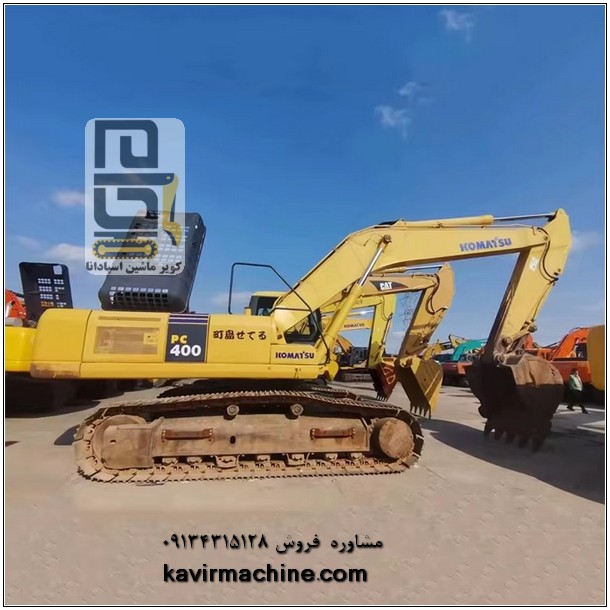
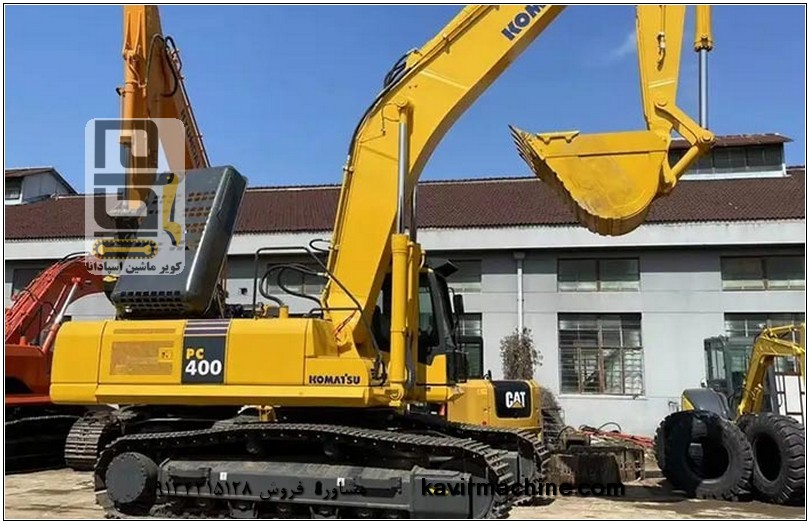
The Komatsu PC400-6 excavator is a heavy-duty model within the Komatsu crawler excavator family, designed for large-scale earthmoving, material loading, and operations in civil engineering and mining projects. With an operating weight of approximately 41 tons for the **PC400-6** version and about 42.6 tons for the PC400LC-6 version, this machine falls into the heavy machinery category. When in good technical condition, it can play a vital role in projects requiring high digging force and substantial operational power.
When selecting an excavator for mining, engine power and bucket size are not the only deciding factors. The synergy between the engine and the hydraulic system, the condition of the undercarriage, the health of the hydraulic pumps, the availability of spare parts, and maintenance costs all directly impact the machine’s productivity. Therefore, an evaluation of the Komatsu PC400-6 should go beyond a simple list of technical specifications and take into account the actual operating conditions of the machine.
Kavir Mashin Espadana Company is a reputable supplier of various Komatsu excavators—as well as models from other leading brands—in Iran. In this article, we examine the technical specifications of the Komatsu PC400-6 excavator, its operational capabilities, industrial applications, key considerations for purchasing a used unit, and essential maintenance principles.
To inquire about excavator pricing, please contact our experts: 09134315128
Introduction to the Komatsu PC400-6 Excavator
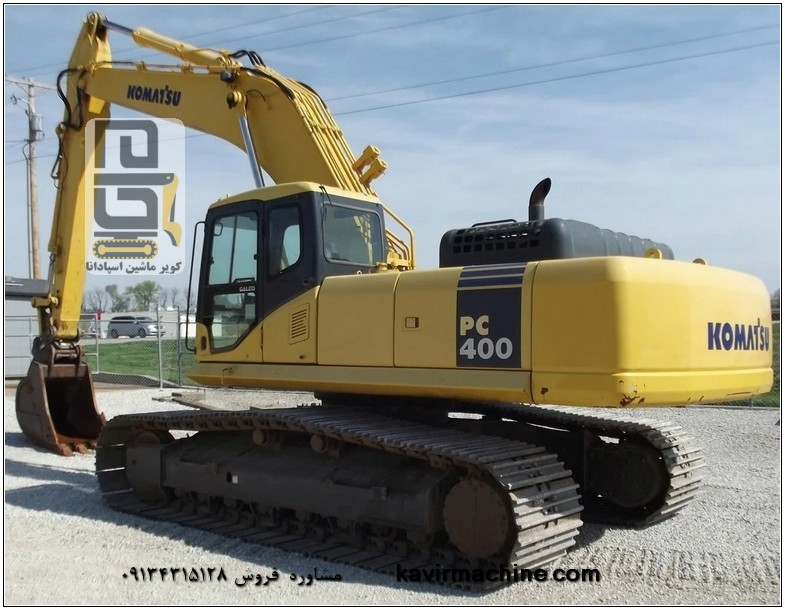
The Komatsu PC400-6 belongs to the sixth generation of this family of hydraulic excavators. Designed for heavy-duty excavation and material handling, its dimensions, weight, and operational power make it a preferred choice for projects where lighter machinery would be insufficient to handle the workload.
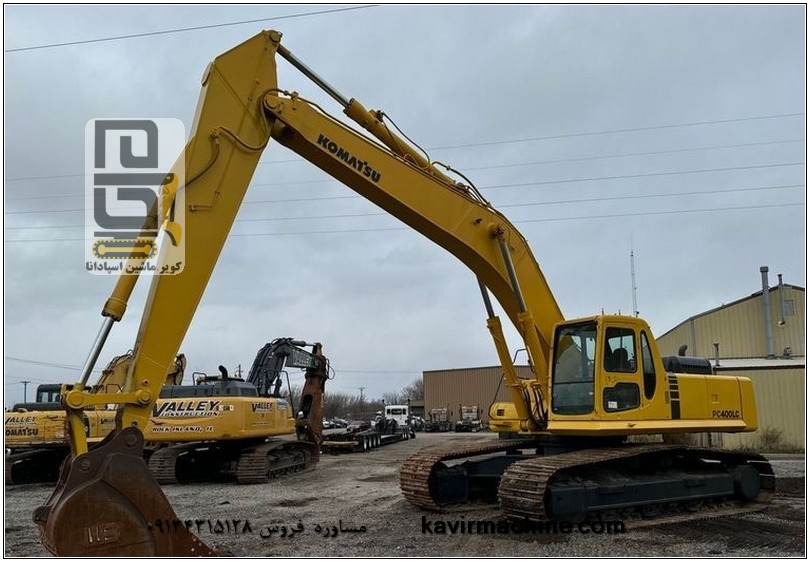
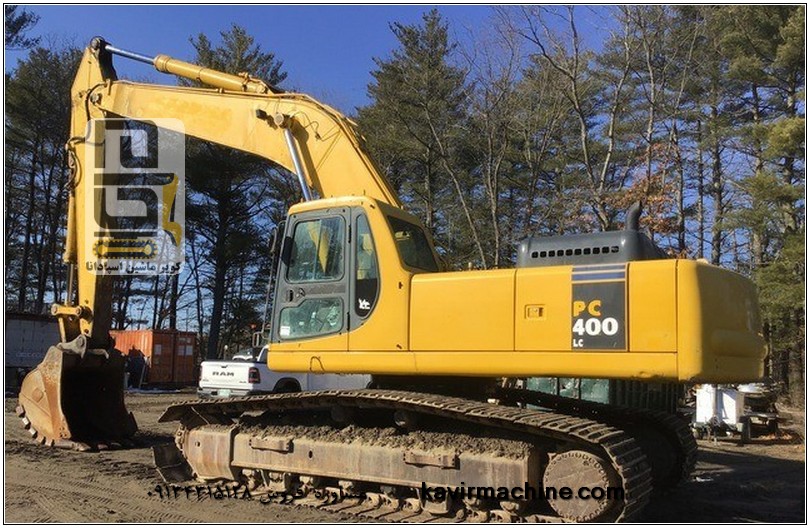
This machine is available in two primary versions: the PC400-6 and the PC400LC-6. The key difference lies in the configuration of the undercarriage; therefore, accurately identifying the specific model is crucial when purchasing the machine, ordering parts, or reviewing technical specifications.
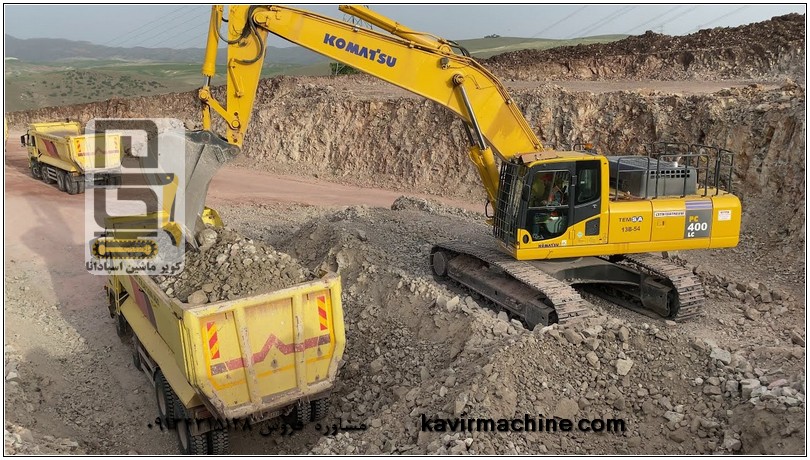
The Komatsu PC400-6 excavator is suitable for tasks such as soil loading, handling mineral materials, excavating large trenches, and executing heavy-duty road construction projects. Of course, its actual performance depends on the condition of the engine and hydraulic system, the type of bucket, the nature of the ground, the operator’s skill, and the maintenance schedule.
Technical Specifications of the Komatsu PC400-6 Excavator
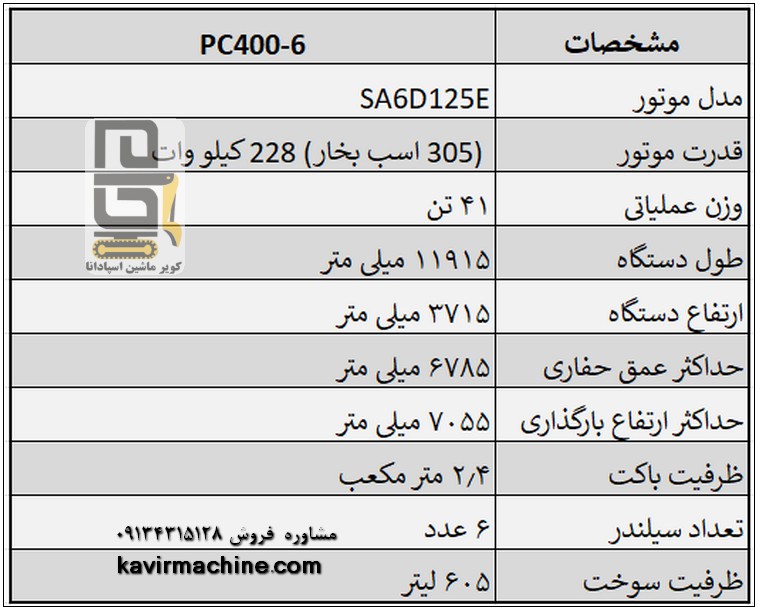
One of the most critical steps in evaluating this machine is examining its technical specifications. The information below is based on the published technical data for the PC400-6 model and its standard configuration. Installed equipment, the type of undercarriage, and the specific machine configuration may result in variations in certain figures.
Komatsu PC400-6 Engine
The technical specifications for this model feature a Komatsu SA6D125E-2 inline six-cylinder diesel engine, equipped with a liquid-cooling system, a turbocharger, and an aftercooler. The engine displacement is approximately 11.04 liters, with a rated power of about 228 kW (equivalent to 306 horsepower, according to the SAE J1349 standard) at 1,950 rpm.
In an excavator, engine power does not simply mean “more power”; This power output must be well-matched to the hydraulic system and loading conditions to ensure the machine can perform excavation and loading operations efficiently.
For used machinery, the condition of the engine is of particular importance. Issues such as abnormal exhaust smoke, increased oil consumption, rising coolant temperatures, power loss under load, and leaks in the oil circuits should all be inspected prior to purchase. Furthermore, the engine’s repair history and the quality of parts used in previous repairs can significantly impact future ownership costs. Hitachi 470 Excavator Price
Excavator Price
Operating Weight and Bucket Capacity
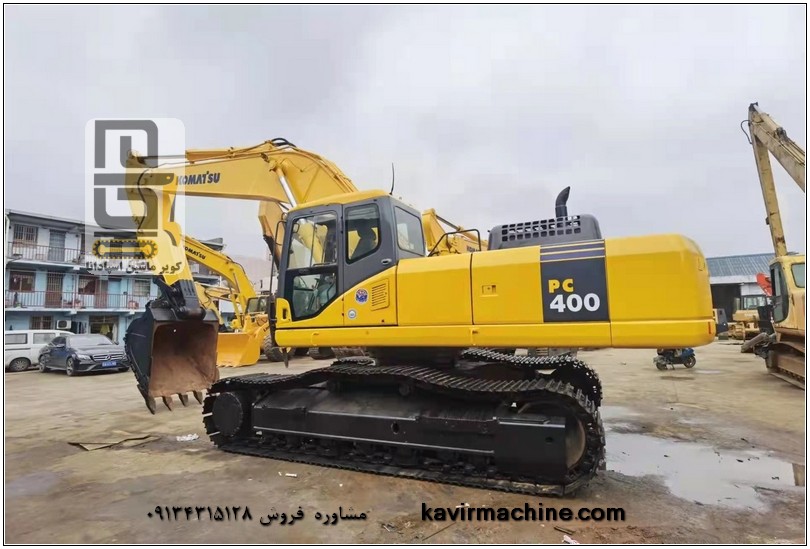
The operating weight of the PC400-6 model in a standard configuration is approximately 41,400 kg, while the PC400LC-6 version weighs approximately 42,600 kg. These figures depend on the installed equipment and the machine’s specific configuration; they should be verified against the specifications of the individual unit.
The standard bucket capacity for this model is approximately 1.8 cubic meters. The selection of a larger or smaller bucket should be based on the density of the material……excavation force, hydraulic power, and the capacity of the hauling equipment. For instance, a bucket designed for light soil is not necessarily the best choice for loading dense rock.
In mining operations, the nominal bucket capacity alone is not a sufficient criterion for calculating loading tonnage. Material density, the bucket fill factor, cycle times, and the machine’s maneuvering conditions must also be factored into the calculations.
Dimensions and Working Range
In a standard configuration—featuring a boom of approximately 7,060 mm and an arm of 3,380 mm—this model offers a maximum digging depth of about 7,760 mm and a maximum digging radius of approximately 12,020 mm.
This working range enables the machine to be used for deep excavation and the handling of large volumes of material. However, the exact reach and dumping height depend on the specific boom, arm, and bucket combination; therefore, when planning operations at a project site, one must consult the working range chart specific to that particular configuration.
Hydraulic System of the Komatsu 400-6
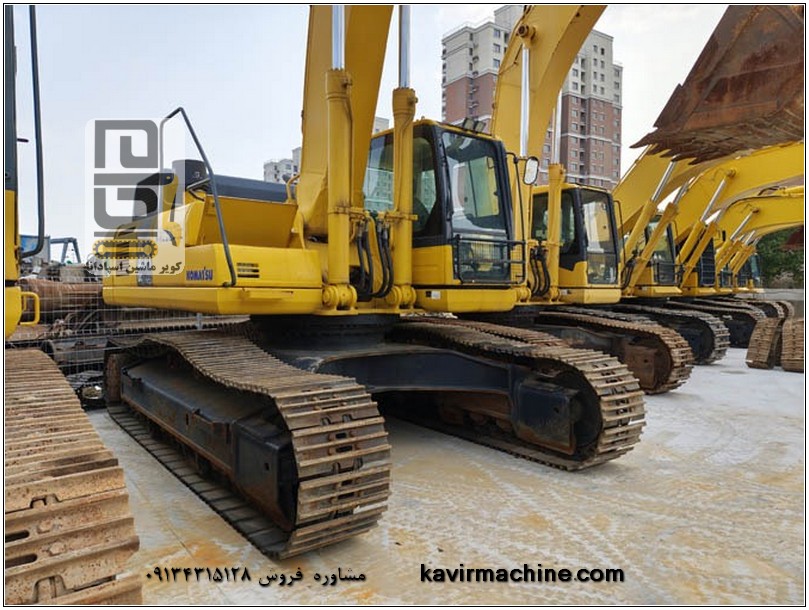
The hydraulic system is one of the most critical components of the PC400-6 excavator; This is because the power required for the movement of the boom, arm, and bucket, as well as for the rotation of the upper structure and the propulsion of the tracks, is transmitted through this system.
In the specifications for this series, variable-displacement piston pumps are utilized as the main pumps. The operational integrity of the hydraulic pump, control valve, travel motors, swing motor, and cylinders plays a critical role in the machine’s performance quality.
If an excavator experiences a loss of digging power as the hydraulic oil warms up, exhibits sluggish movement in the boom or arm, or fails to execute multiple simultaneous movements correctly, the hydraulic circuit must undergo a systematic inspection. These symptoms may stem from pump wear, internal leakage within valves or cylinders, a clogged filter, or incorrect pressure settings; the definitive cause cannot be determined without technical testing.
To maintain the performance of the hydraulic system, it is essential to use oil that meets the recommended specifications, replace filters on schedule, monitor oil contamination, and check for leaks. Improper repair of the pump or the use of incompatible parts can lead to increased operating temperatures, reduced efficiency, and damage to other system components. Price of Hitachi 350 Excavator
Applications of the Komatsu PC400-6 Excavator in Mining and Road Construction
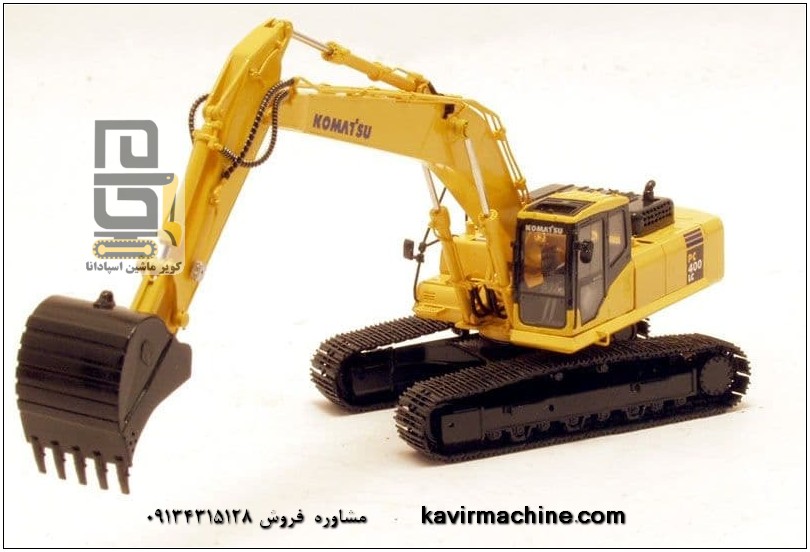
Loading Mineral Materials
In mines—such as those for iron ore, copper, and other minerals—the Komatsu 400 excavator can be used to load extracted materials into mining trucks or dump trucks suited to the operation’s capacity. The selection of this machine should be based on the capacity of the hauling fleet, maneuvering distance, the nature of the material, and the number of loading cycles.
Heavy-Duty Excavation
In large-scale excavation projects—including trenching, site preparation, and the removal of soil layers—the weight and operational power of this machine enable the execution of heavy-duty tasks. Final productivity depends on the soil composition, the machine’s positioning, and the operator’s skill.
Road Construction Projects
In road construction, this model can be utilized for excavation, material loading, and large-volume earthworks on main routes and infrastructure projects. However, when working in confined urban spaces, the machine’s dimensions and the required turning radius must be evaluated before selection. Zoomlion 360 Excavator Price
Operating with a Hydraulic Hammer
By installing a compatible hydraulic hammer, an excavator can be used for demolishing rock and concrete or breaking up hard materials. However, installing a hammer is not solely dependent on the machine’s weight; factors such as oil flow rate and pressure, the return line, valve types, fittings, the shock-absorption system, and the hammer manufacturer’s specific requirements must all be evaluated.
Using an unsuitable hammer or operating with a faulty hydraulic system can damage the pump, control valve, hoses, and the internal components of the hammer. Therefore, ensuring technical compatibility between the machine and the hammer is essential prior to installation.
Komatsu PC400-6 Undercarriage and the Importance of Its Maintenance
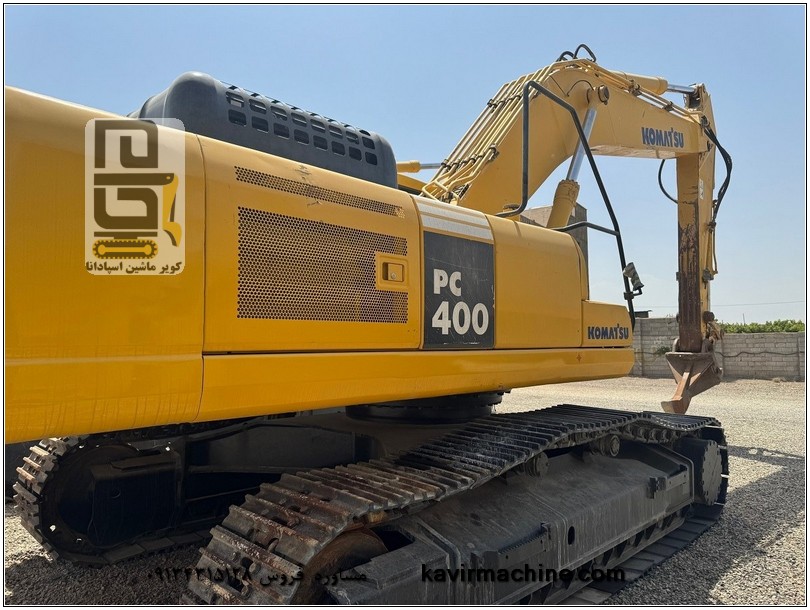
The undercarriage is one of the most costly components to maintain on a crawler excavator. The tracks (chains), track shoes, upper and lower rollers, sprockets, and the track tensioning assembly are in constant contact with the ground and are subjected to significant stress, particularly in rock quarries. When purchasing a Komatsu 400-6, do not focus solely on the appearance of the track shoes. You must also inspect the wear on the track pins and bushings, the condition of the sprocket teeth, the play in the rollers, any leaks in the drive components, and the functionality of the track tensioning system.
Excessive track tension increases the load on undercarriage components, while improper tensioning raises the risk of impact damage and accelerated wear. Track tension should be adjusted in accordance with the manufacturer’s guidelines and the specific operating conditions.
In rocky environments, regular removal of accumulated mud and debris, periodic wear inspections, and avoiding sharp turns on hard surfaces will help minimize wear and tear.
Fuel Consumption of the Komatsu PC400-6 Excavator
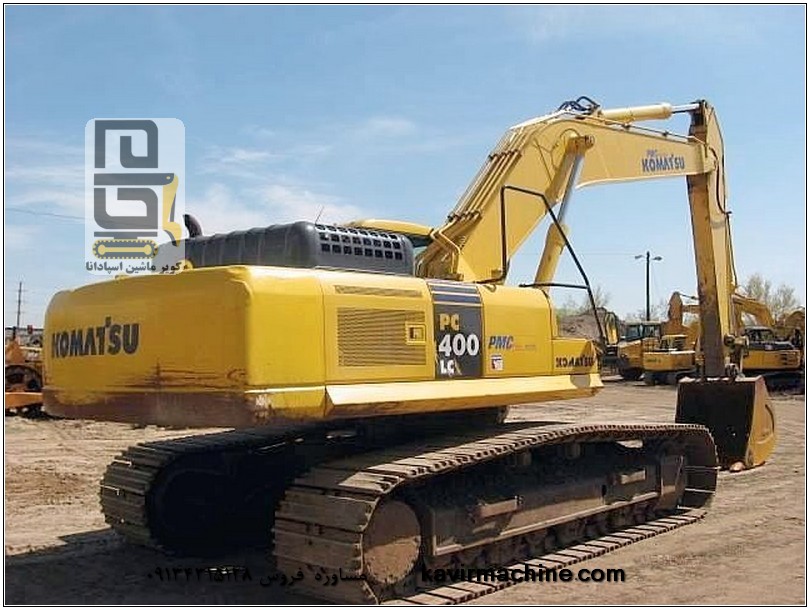
Fuel consumption for the PC400-6 is not a fixed figure applicable to all projects. Factors such as the type of material, load size, engine idling time, the condition of the injectors, the health of the turbocharger, engine settings, and the operator’s technique all influence diesel consumption.
For this reason, stating a definitive hourly fuel consumption figure without specifying the operating conditions can be misleading. A more accurate approach involves recording fuel consumption over a specific operational period and comparing it against productive working hours, the volume of material loaded, or the tonnage moved.
To manage fuel costs, it is essential to regularly service air and fuel filters, avoid prolonged engine idling, address engine faults, and provide proper operator training. If fuel consumption increases compared to previous levels, a technical inspection of the engine and an assessment of operating conditions should be conducted before drawing any conclusions.
Spare Parts for the Komatsu PC400 Excavator
Sourcing the right spare parts for used heavy machinery plays a crucial role in minimizing equipment downtime. Parts for the Komatsu PC400-6 can be categorized based on the machine’s major systems.
Engine components include oil, air, and fuel filters, cooling system parts, fuel delivery components, and internal engine parts. In the hydraulic system, the main pump, seal kits, control valve components, cylinders, hoses, and fittings are of particular importance.
Regarding the undercarriage, components such as tracks, track shoes, rollers, sprockets, and track tensioning hardware require periodic inspection. Final drive components and the swing assembly may also require repair or replacement, depending on operating conditions and the level of wear and tear.
When ordering parts, simply specifying “Komatsu 400-6” is often insufficient. Providing the machine’s serial number, the specific part code, the technical part number found in the catalog, and confirming whether the part is for the PC400-6 or PC400LC-6 variant can help prevent incorrect purchases.
Price of Hitachi 490 Excavator
Important Considerations When Purchasing a Used Komatsu 400-6 Excavator
Purchasing used machinery is only economical when its technical condition aligns with the asking price. A clean appearance or a fresh coat of paint is not, by itself, an indicator of good health; a technical inspection must cover the engine, hydraulic system, chassis, undercarriage, and repair history.
Before purchasing, start the machine while the engine is cold and observe the starting process, exhaust smoke, engine noise, and the performance of the cooling system. Subsequently, test the movements of the boom, arm, and bucket, the rotation of the upper structure (swing), and the movement of both tracks under appropriate operating conditions.
Regarding the hydraulic system, it is also crucial to evaluate performance once the oil has warmed up, as certain pump defects and internal leaks become more apparent at higher temperatures. Pressure and flow rate testing of the hydraulic circuits should be conducted by a qualified technician using the proper diagnostic tools.
Assess the condition of the undercarriage separately, as a major overhaul can entail significant costs. Additionally, verify the serial number, ownership documentation, the repair history of the engine and hydraulic pumps, and the availability of spare parts.
It is advisable to estimate the potential costs for repairs and necessary parts before finalizing the transaction. A lower purchase price is only a genuine advantage if the costs required to make the machine operational—along with the risk of downtime—do not negate the economic viability of the purchase.
Komatsu 400-8 Excavator Price Komatsu
Conclusion: Is the Komatsu PC400-6 the Right Choice?
To purchase various types of excavators, please contact our experts: 03137475120
The Komatsu PC400-6 excavator—featuring a six-cylinder turbocharged engine, an operating weight of approximately 41 to 42.6 tons (in standard configurations), and a bucket capacity of around 1.8 cubic meters—is a viable option for heavy-duty excavation, loading mineral materials, and large-scale road construction projects.
However, the value of a used machine is not determined solely by its brand or model. Factors such as the condition of the engine, the performance of the hydraulic pump, the wear level of the undercarriage, the quality of any previous repairs, and the availability of spare parts must all be taken into account when making a decision.
If you are planning to purchase, repair, or source parts for a Komatsu PC400-6 excavator, verifying the serial number and the exact specifications of the unit—prior to ordering parts or commencing repairs—will help minimize the risk of errors and avoid unnecessary costs. For a more cost-effective choice, consider the total cost of ownership and the machine’s actual productivity… Alongside the initial valuation price…
Frequently Asked Questions About the Komatsu 400-6 Excavator
1. What is the weight of the Komatsu 400-6 excavator?
The operating weight of the PC400-6 model in a standard configuration is approximately 41,400 kg, while the PC400LC-6 version weighs approximately 42,600 kg. Installed equipment and the specific machine configuration may result in variations in the final weight.
2. What are the specifications of the Komatsu PC400-6 engine?
In the standard specifications for this model, it is equipped with a Komatsu SA6D125E-2 engine—a six-cylinder unit with a displacement of approximately 11.04 liters, featuring a turbocharger and an aftercooler. The rated engine power is approximately 228 kW (306 hp) according to the SAE J1349 standard.
3. What is the bucket capacity of the Komatsu 400 excavator?
In a typical standard configuration, the bucket capacity is approximately 1.8 cubic meters. The appropriate capacity for any given project should be selected based on the type of material, its density, the required digging force, and loading conditions.
4.
What is the difference between the Komatsu PC400-6 and the PC400LC-6?
The primary difference between these two versions lies in the undercarriage configuration and certain related specifications. Operating weight and dimensions associated with the undercarriage may vary; therefore, when purchasing or ordering parts, it is essential to verify the full machine model and serial number.
5. What is the fuel consumption of the Komatsu 400-6?
Fuel consumption depends on loading conditions, soil/ground type, engine condition, idling time, and operator skill. For a reliable estimate, actual consumption must be measured under specific working conditions; a single, fixed figure cannot be accurately applied to all projects.
6. Can a hydraulic hammer (breaker) be installed on a Komatsu 400-6 excavator?
Yes, provided the machine is technically compatible with the specific hammer. Factors such as hydraulic flow and pressure, the return circuit, connections, the weight of the hammer, and the manufacturer’s requirements must be evaluated prior to installation. Additionally, the condition of the hydraulic pump and the control valve is of critical importance.
7. Which components should be inspected when purchasing a used Komatsu PC400-6?
Key areas to examine include the engine, hydraulic pump and control valve, undercarriage, chassis, swing mechanism, final drives, and maintenance/repair records. Testing the machine both while cold and after the oil has warmed up—combined with a professional inspection—will help in identifying potential defects more effectively.
8. How should spare parts for the Komatsu 400-6 be selected?
The best approach is to match the part number against the official parts catalog using the machine’s serial number. Relying solely on the model name may lead to ordering an incorrect or incompatible part. Particularly regarding hydraulic components, the engine, and the undercarriage.
9. Is the Komatsu PC400-6 suitable for mining operations?
Given its weight and operating power, this model is suitable for many heavy-duty mining tasks; however, the final decision depends on the type of material, expected production volume, truck capacity, the machine’s technical condition, and maintenance costs.
10. What factors influence the price of a Komatsu PC400-6 excavator?
The year of manufacture, actual operating hours, the condition of the engine and hydraulic pump, the degree of undercarriage wear, the integrity of the chassis, repair history, installed equipment, and market conditions all affect the price. For an accurate comparison, potential repair costs should also be factored in alongside the purchase price.
Buying and Selling New and Used Road Construction, Mining, and Drilling Machinery:
At Kavir Mashin Espadana, in addition to new machinery and parts, we offer used road construction and mining equipment—complete with warranties and after-sales service—including the following:
Hydraulic Hammers, Loaders, Excavators, Dump Trucks, Forklifts, Backhoes, Drill Wagons, Graders, and Bulldozers. For expert consultation, or to inquire about pricing for Komatsu 400 excavators and their spare parts, please contact our specialists.
Kavir Machine Espadana Company

Kavir Machine Espadana Company is registered in Isfahan Province with a focus on the importation of road construction and mining machinery. Furthermore, it serves as the sole exclusive distributor of Hyundai Everdigm hydraulic hammers throughout the country. Drawing upon decades of experience in mining contracting as well as road construction and civil engineering projects, the company’s management has expanded its operations into the import and sale of road construction and mining machinery, along with related parts and equipment.
Recognizing the shortage of high-quality machinery in the country—and despite challenges such as sanctions and customs-related issues—the company has undertaken the direct importation of mach……machinery from reputable global manufacturers. In this regard, a cooperation agreement was signed with the Japanese company Sumitomo in 2003 (1382 SH), which resulted in the importation of the first batch of brand-new Komatsu machinery into Iran. It is our hope that, by relying on God Almighty and aiming to ensure the satisfaction of our valued customers, we may continue to take firm steps toward the development and prosperity of our beloved Iran.
Contact Information for Kavir Machine Espadana
Isfahan, Zob-e Ahan Road (3rd kilometer), right-hand side frontage road


